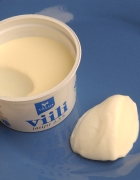
Hjalmar Ingmans viili

A cheesemaker from 1912 from the book by Bengt Wallén.

A cheesemaker from 1912 from the book "Ostnyland/Juusto - uusimaa" by Bengt Wallén.

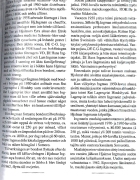
Here is a brilliant little text copied from the book “Ostnyland / Juusto-uusimaa” by Bengt Wallén from 2003 that tells the story of how Hjalmar Ingman started trading with viili in his early twenties. It is inspiring to read about how the viili was made from raw milk (tinkimaito), freshly milked and still warm. It makes a real difference to the taste and consistency of the viili. I am struggling to find a place to buy raw milk where I live in England. It is almost impossible to get hold of!

Hjalmar Ingmans viili - with his initials on the wooden bucket. (From the book Ostnyland - Juusto-uusimaa" by Bengt Wallén 2003)

Here is an excerpt from the book:

VIILI CUPBOARD

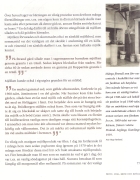
I got a very interesting mail from Yrsa Lindquist who wrote a book about food culture on the Finnish coastal areas in 2009. The book has a wonderful picture of a viili-cupboard – purely for making and storing the viili (or fil as it is called in Swedish). Yrsa comes from the same place as the founder of the dairy producer Ingman (nowadays Arla Ingman). She tells the story of how the founder himself, Hjalmar Ingman, rowed to Helsingfors with his viili.

A fantastic picture from viilitrading in Helsinki market square in the 1930's. Hjalmar Ingman selling viili from his boat in wooden barrels.


Here are some scanned pages from Yrsa’s book, in Swedish. Thank you Yrsa!

Fight for tinkimaito!

In this article in the paper Maaseudun tulevaisuus they argue the case for saving the “tinkimaito” (raw milk bought straight from the farm) that Finnish central government is now threatening to forbid. The sale of tinkimaito has actually risen a lot over the last few years due to the fact that lactose-intolerant people can still drink it. The raw milk is also known for many other heath benefits:

“Few people are aware that clean, raw milk from grass-fed cows was actually used as a medicine in the early part of the last century. That’s right. Milk straight from the udder, a sort of “stem cell” of foods, was used as medicine to treat, and frequently cure some serious chronic diseases. From the time of Hippocrates to until just after World War II, this “white blood” nourished and healed uncounted millions.” Read more about the benefits here: http://www.raw-milk-facts.com/raw_milk_health_benefits.html

Download the PDF of the article here (unfortunately in Finnish only)

Lehtileike Tinkimaito

Culture = root or seed

I have been told that juuri is the word used for bread culture (sourdough for limppu) and means root, but that the viili culture  is a “seed” and not “root”.

This is what I have been told:

Viilinsiemen (which translates like ”seed of viili” or ”seed for viili”) or juuri (in the past the word juuri was used for both the “seed” for dough for limppu but also for the seed to viili. Other words may also have been used.)

Juuri has another meaning: it is a root or aluspiimä (which translates like “base for fermented milk”) or pohjapiimä (almost like previous). In these two latter ones there is the word “piimä” which is more or less the Finnish synonym for fermented milk (a mesophilic fermented milk, yoghurt didn’t exist in Finland those days).

So it is interesting that Finnish culture and language has a differentiation between these two very related words SEED and ROOT. I am curious to find out more about how this has developed, so if anyone has anything to contribute to this, please let me know.

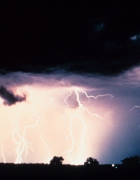
Thunderstorm

“Sometimes the weather has an effect on the culture, such as thunderstorm they say. Viili can become so called “kokkeli piima” Some cultures make it long viili or long fil my is the short one and can hold its shape as a solid as yougurt.
i have also noticed that as it is setting it needs to be still, and not moved about. Interesting… folk tales, but I found it to be tru.”
Anneli

A taste of the homeland

I got this great viilistory from Lynn in Minnesota, an area with high density of Scandinavian immigrants. Thank you Lynn!

“It is a great joy for me to discover that you have made your project on viili.  I live in Minnesota, which has a large number of Finnish immigrants that have eaten a great deal of viili during their life. Both my parents were 100% Finn and my mom always knew ‘someone…who knew someone’…who had a villi starter.  I have many fond memories from my childhood of eating plain viili, or as we called it viilia, with fresh homemade bread or hardtack for my lunch.  It was especially yummy and cool to eat in the hot summers.   The starter was always considered to be like treasure to the ladies in the area, and any Finn woman who kept her viili starter going was considered to be very wise.   I recall a winter when my mother allowed the viili to be completely eaten to make room in the refrigerator for holiday baking.  She searched among friends and neighbors for a new starter.  It was a great disappointment to find that the only bowl left belonged to a Mrs. Korpi, and she had passed away and the starter had gone bad.  It is funny and curious that I clearly remember the grief among the older women as they discussed the need to locate a fresh starter at her funeral.  As an adult, I realize today how precious that food was to the Finnish culture as a taste of the homeland. I grew up knowing that the starter must be protected as a link between us and them.

My dad’s family is from Sorila, Finland near Tampere.   I believe that isn’t too far from Salo, both western towns.   My grandparents were poor rural folk in Finland, but never went hungry because they had a couple of cows and made viili. They had a sauna, and on Saturday nights they invited neighbors for a bath and refreshing bowl of viili to cool down afterwards.  Finns are very social people, in a quiet and understated way.  They put out a table filled with home-smoked fish, rye breads, berries (they said Cloudberries were best), and the containers with the viili.  There was plenty to share and plenty to talk about.

When I was in my early teens, relatives from Finland came to visit us.  They were very surprised at how popular viili was still here among American-Finns.  They said it was considered to be more of a ‘peasant’ food in modern Finland.  But they eagerly ate it with my family and took back a starter to Finland. The viili that we served was from a starter that came over during World War II.  To this day, I still crave a cold bowl and am looking for my own starter seed.  My sister, nieces, and cousins are all hoping that I find one and share it with them.  The tradition to have a bowl or Mason jar on the kitchen counter full of viili  is a cherished part of our heritage.  I have tried earnestly to explain to my children the process of waiting for the viili to be ready and the satisfaction of consuming a bowl.  They think I am crazy to enjoy milk that sat out all night and turned into a gelatinous mass of unflavored yogurt.  They can’t understand that if you were hungry, a bowl of viili would fill you.  If you didn’t have much appetite, a bowl with some peach slices would be just right.  Or if you had a tummy ache, that same viili would mysteriously clear up the stomach problem.  I still wonder at the mystery of this wonderful food!

In fact, I found your cultural research project as I searched the internet for a source to buy a starter.  I told my Finnish friend that I was going to get a starter and would be sharing with people soon.  I can only say that she gave me that content knowing look that passes between people who have shared a bowl of viilia many years ago. The thought makes me miss my aiti and the many other foods that came over to this country.  Oh, please…I want Finnish Squeaky Cheese now!

Hope your research is a success. “

Lynn

VIILI IN SAN DIEGO

I got this story from Anneli Johnson from Quincy, US. She is an avid advocate for local food in her area, having started the Farmers market. She is also lecturing and doing workshops on Finnish food traditions and recently she did a talk about ViILI at Finnfest, San Diego. That is how I got to hear about her work. I wish her talk had been recorded as I would have loved to have been in the audience!

“Helo Eva: Good to hear from you re: viili.
It was a great FinnFest at San Diego. My viili presentation and demo was for the full house, standing room only.
I gave out more than 100 viili starters, (pohja piimaa) I never realized how folks are interested in this Finnish pro biotic culture of viili.
If you go on Valio web pages, you learn a lot from there. Also the viili origin, is according to wikipedia from Sweden. I am sure folks in the countryside still have theier old culture left, as they guarded it carefully. It is quite prolific in nature, and I understand may even be prohibited in US for that reason alone.
But, if viili, our Finnish pro biotic is a contra ban, then there are now more than one hundred FinnFest participants making their own villi in many corners of US and braking the law.
One of my participants drank her culture straight away, so I had to remind the audience, it is to take home and start your own. One asked, “if I leave my milk on the kitchen counter, wouln’t it turn to viili”? She needed to be corrected, naturally. There were many stories folks shared from the olden days. How , for example, viili was served on the common table at work camps and for farm workers. it was made in a large shallow enamel dish, so much of the cream could settle on top, and give the milk more expose of air as the culture needs the air to do its job of transforming the sugars to a different pro biotic form.
I wish you luck and wish I was there. I am from Mynamaki, which is not far from Salo.
Terveisin, Helvi Anneli Johnson”